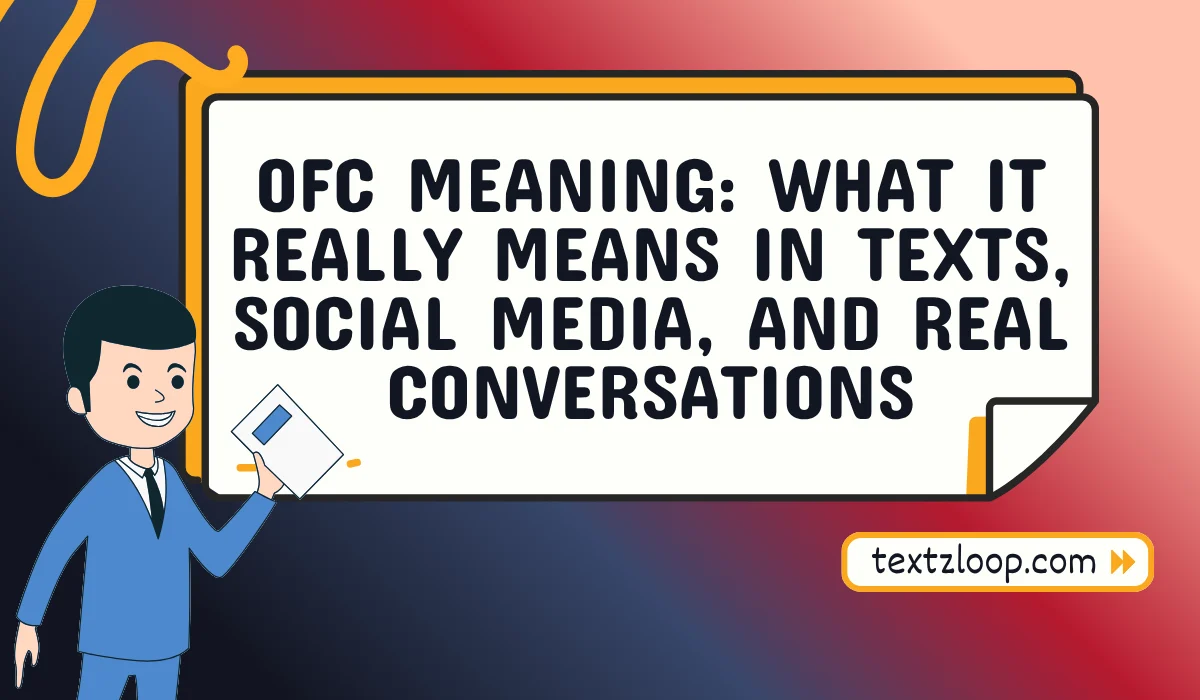
If you spend time on social media, texting apps, or online conversations, you’ve probably seen someone reply with “OFC.”
At first glance, it can feel confusing. Is it casual? Rude? Friendly? Professional? Many people search for the ofc meaning because the abbreviation appears everywhere — from WhatsApp chats to TikTok comments and Instagram DMs.
The truth is simple: “OFC” is one of those internet shortcuts people use naturally in fast conversations. But depending on the tone and situation, it can sound warm, sarcastic, supportive, or even dismissive.
Understanding how people actually use it in real life makes a big difference.
In this guide, you’ll learn:
- The exact meaning of OFC
- Where it came from
- How people use it online
- Real conversation examples
- Emotional meanings behind it
- When you should — and shouldn’t — use it
OFC Meaning – Quick Definition
OFC usually stands for:
“Of course.”
People use it in texting and online chats to respond quickly without typing the full phrase.
Simple Meaning
It generally expresses:
- Agreement
- Confirmation
- Reassurance
- Confidence
- Support
Quick Examples
- “Can you send me the notes?”
“OFC.” - “Are you coming tonight?”
“ofc 😂” - “You still support me, right?”
“OFC always.”
Tone Matters
“OFC” can sound:
- Friendly
- Casual
- Caring
- Playful
- Confident
- Sometimes sarcastic
The tone depends entirely on context and relationship.
Origin & Background of OFC
The abbreviation “OFC” became popular during the rise of internet messaging culture in the early 2000s.
As texting evolved, people started shortening common phrases to save time. Similar abbreviations like:
- LOL
- BRB
- IMO
- IDK
became part of everyday digital language.
“OFC” naturally followed because “of course” is used frequently in conversation.
Why It Became Popular
Typing fast became part of online culture. On platforms like:
- MSN Messenger
- Facebook Chat
- Snapchat
- TikTok
short replies felt more natural and efficient.
Over time, “OFC” became less about saving characters and more about conversational style.
Today, it’s widely recognized across different age groups, especially among younger internet users.
Real-Life Conversations Using OFC
Here are realistic examples showing how people actually use the term.
WhatsApp Conversation
Person A:
Can you cover for me tomorrow?
Person B:
OFC. I got you.
Instagram DM
Person A:
You watched the new episode already??
Person B:
ofc 😭 it was insane
TikTok Comments
User 1:
This song deserved more hype.
User 2:
OFC. It’s honestly underrated.
Text Message
Person A:
Are we still best friends after that argument?
Person B:
OFC. One fight changes nothing.
Group Chat Example
Friend 1:
Who’s bringing snacks?
Friend 2:
ofc it’ll be me again 😂
Emotional & Psychological Meaning Behind OFC
Language online is emotional, even when it’s short.
That’s why “OFC” matters more than many people realize.
It Creates Reassurance
When someone says “ofc,” they often want to make the other person feel secure.
Example:
- “Will you help me?”
- “OFC.”
The quick response signals certainty and reliability.
It Reflects Comfort
People rarely use “OFC” with strangers in formal settings. It’s more common between people who already share familiarity.
It creates a relaxed atmosphere.
It Shows Confidence
Typing “of course” fully can feel formal. “OFC” feels immediate and natural.
That directness often reflects:
- Confidence
- Casual closeness
- Emotional ease
- Internet fluency
Sometimes It Hides Sarcasm
Tone online is tricky.
Example:
- “You forgot again?”
- “OFC I did 🙄”
In this case, the meaning changes emotionally.
How OFC Is Used in Different Contexts
Social Media Usage
On platforms like TikTok, Instagram, and X, “OFC” is used casually to:
- Agree with opinions
- Support creators
- Respond quickly
- Add humor
Example:
“OFC this trend is back again.”
Friends & Relationships
Among friends or couples, OFC often sounds warm and supportive.
Examples:
- “Would you miss me?”
- “ofc”
- “You’re coming to my graduation?”
- “OFC ❤️”
Here, it carries emotional reassurance.
Work or Professional Settings
This is where people need caution.
Using “OFC” professionally can feel:
- Too casual
- Unprofessional
- Dismissive
Instead of:
“ofc”
Many professionals prefer:
“Of course.”
“Absolutely.”
“Certainly.”
However, in relaxed startup cultures or internal chats, OFC may still appear casually.
Casual vs Serious Tone
| Situation | Works Well? | Why |
|---|---|---|
| Chatting with friends | Yes | Casual and natural |
| Instagram comments | Yes | Common internet slang |
| Romantic texting | Yes | Feels warm and quick |
| Email to boss | No | Too informal |
| Academic writing | No | Not appropriate |
| Customer support | Rarely | Can appear careless |
Common Misunderstandings About OFC
1. People Think It’s Always Friendly
Not necessarily.
Depending on punctuation or emojis, it can sound sarcastic.
Example:
- “OFC you forgot again.”
That tone feels very different.
2. Some Think It Means Something Else
In certain online communities, abbreviations can have multiple meanings.
But in most texting and social contexts, OFC overwhelmingly means:
“Of course.”
3. It Can Sound Dismissive
A short “ofc” without warmth may seem dry.
Compare:
- “ofc 😊”
- “ofc.”
One feels caring. The other may feel cold.
4. Not Ideal for Formal Communication
Many younger users forget that workplace communication still values clarity and professionalism.
Using OFC in formal emails can create the wrong impression.
OFC Comparison Table
| Term | Meaning | Tone | Common Usage |
|---|---|---|---|
| OFC | Of course | Casual, confident | Texting, social media |
| Yep | Yes | Friendly | Everyday conversation |
| Absolutely | Strong agreement | Professional/friendly | Work & personal |
| Sure | Agreement | Neutral | General conversation |
| Nah | No | Casual slang | Friends/social media |
| IDK | I don’t know | Informal | Texting |
| Definitely | Strong certainty | Clear and positive | Formal & informal |
| Never | Opposite of OFC | Negative | Serious refusal |
Key Insight
“OFC” stands out because it combines speed, confidence, and emotional familiarity in one short expression.
Variations and Types of OFC
Here are common ways people use or modify OFC online.
1. ofc
The standard lowercase version used casually in texts.
2. OFCCC
An exaggerated version showing excitement or strong agreement.
3. OFC 😂
Adds humor or playful energy.
4. OFC ❤️
Used affectionately in relationships or close friendships.
5. ofc not
A sarcastic or joking contradiction.
6. OFC bro
Friendly and relaxed tone between friends.
7. OFC girl
Popular in supportive online conversations.
8. OFC duh
Can sound playful or slightly rude depending on tone.
9. OFC obviously
Adds emphasis and certainty.
10. OFC anytime
Shows emotional support and willingness to help.
How to Respond When Someone Uses OFC
Casual Replies
- “Thanks!”
- “Knew I could count on you.”
- “Appreciate it.”
Funny Replies
- “As you should 😎”
- “That’s the correct answer.”
- “Good. You passed the test.”
Mature & Confident Replies
- “I value that.”
- “Glad we understand each other.”
- “That means a lot.”
Private or Respectful Replies
- “Thank you for being supportive.”
- “I genuinely appreciate it.”
- “You always make things easier.”
Regional & Cultural Usage of OFC
Internet slang changes across cultures.
Even though “OFC” is globally understood online, its tone can vary.
Western Culture
In the US, UK, and Canada, OFC is extremely common among younger users.
It often sounds:
- Friendly
- Fast-paced
- Casual
- Emotionally relaxed
People use it naturally in digital conversations.
Asian Culture
In many Asian countries, English slang is heavily influenced by internet culture.
“OFC” is often used by:
- Students
- Gamers
- K-pop fans
- Social media users
However, many users avoid it in professional communication because formality is culturally important.
Middle Eastern Culture
In Middle Eastern online communities, OFC is common among bilingual younger generations.
Usage tends to appear in:
- Instagram chats
- Gaming communities
- Snapchat conversations
Tone can feel more expressive when paired with emojis.
Global Internet Usage
Globally, OFC has become part of universal internet language.
Even users who are not native English speakers recognize it instantly because of:
- Memes
- Social media
- Gaming culture
- Online communities
FAQs About OFC Meaning
What does OFC mean in texting?
OFC usually means “of course.” It’s a casual way to express agreement or confirmation in messages.
Is OFC rude?
Not usually. However, tone matters. In some situations, it can sound sarcastic or dismissive.
What does OFC mean from a girl or guy?
The meaning is generally the same: “of course.” Emotional tone depends more on context than gender.
Is OFC formal or informal?
OFC is informal. It’s best used in texting, social media, and casual conversations.
Can OFC be used professionally?
In most professional settings, writing “of course” fully is better and more polished.
Why do people use OFC instead of typing “of course”?
It’s faster, feels conversational, and matches modern texting culture.
Is OFC popular on TikTok and Instagram?
Yes. It’s widely used in comments, captions, DMs, and online reactions.
Conclusion
The meaning of OFC is simple on the surface, but real-life usage adds emotional depth.
Most commonly, it means:
“Of course.”
But depending on tone, emojis, and context, it can express:
- Support
- Confidence
- Humor
- Reassurance
- Sarcasm
- Emotional closeness
That’s why understanding internet slang today isn’t just about definitions. It’s about understanding how people communicate emotionally in digital spaces.
Used naturally, OFC makes conversations feel faster, lighter, and more personal.
And like most modern slang, the real meaning always comes from the human connection behind the words.
Discover more article
Y/N Meaning in Text: What It Really Means in Chats, Social Media, and Everyday Conversations
CFS Meaning Explained: What It Really Means in Texts, Social Media, and Everyday Conversations