If you’ve spent time on social media or messaging apps, you’ve probably seen the abbreviation “WYF” appear in chats, comments, or direct messages.
At first glance, it can feel confusing. Is it a question? An insult? A casual greeting?
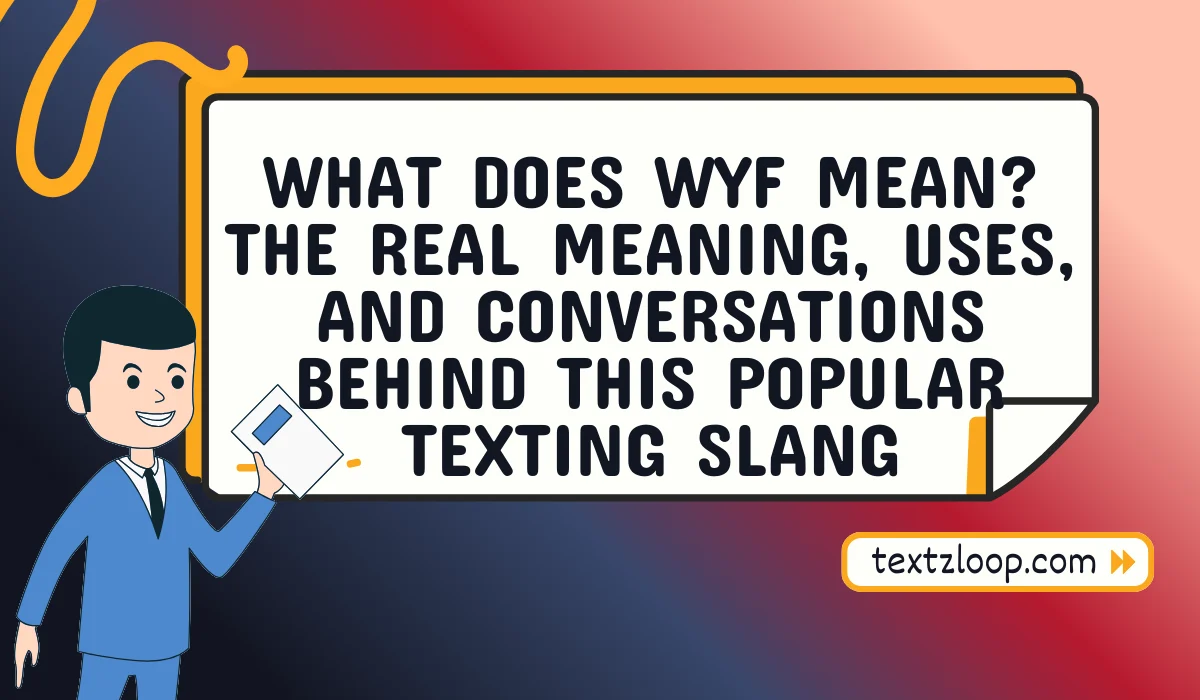
Many people search for “what does WYF mean” because the acronym can carry slightly different meanings depending on the conversation, tone, and platform.
In modern digital communication, short abbreviations save time and keep conversations casual. WYF is one of those quick phrases that people use in texting, but understanding the context is key.
This guide breaks down the real meaning of WYF, how people use it in everyday conversations, and how you can respond naturally.
WYF – Quick Meaning
WYF usually stands for:
“Where You From?”
It’s a casual question people use in texting or online conversations to ask about someone’s location, hometown, or background.
Simple definition
WYF = Where are you from?
Common situations where people use WYF
- When meeting someone online
- During casual social media chats
- In dating conversations
- When joining new online communities
Quick examples
“Hey, WYF?”
“You seem cool. WYF?”
“I’m new here. WYF?”
In most cases, it’s simply a friendly way to start a conversation.
Origin & Background
Like many internet abbreviations, WYF became popular during the rise of mobile texting culture in the early 2010s.
As messaging apps and social media platforms expanded, people started shortening common questions into quick acronyms.
For example:
- BRB – Be Right Back
- LOL – Laugh Out Loud
- IDK – I Don’t Know
- WYF – Where You From
WYF became particularly common on platforms where people frequently meet strangers or new friends.
Some examples include:
- chat-based social media communities
- gaming platforms
- online dating apps
- comment sections
Because people often meet others from different cities or countries online, asking “Where are you from?” became a natural conversation starter.
Typing the full sentence every time felt unnecessary, so WYF became the quick shorthand.
Today, the phrase continues to appear widely across messaging platforms and youth internet culture.
Real-Life Conversations
To truly understand how WYF works, it helps to see how people actually use it in conversation.
Below are realistic examples similar to everyday chats.
WhatsApp Conversation
Person A:
Hey, I saw your comment in the group chat. You seem funny 😂
Person B:
Haha thanks
Person A:
So WYF?
Person B:
I’m from Toronto. You?
Person A:
Nice, I’m from London.
Instagram DMs
Person A:
Your travel photos are amazing!
Person B:
Thank you!
Person A:
WYF btw?
Person B:
Originally from Spain but living in Germany now.
TikTok Comments
User 1:
That accent sounds cool
User 2:
Thanks haha
User 1:
WYF?
User 2:
Australia 🇦🇺
Casual Text Message
Friend 1:
You joined the gaming server today?
Friend 2:
Yeah
Friend 1:
Nice. WYF?
Friend 2:
Pakistan. What about you?
These conversations show that WYF is usually friendly, curious, and informal.
Emotional & Psychological Meaning
Although WYF seems like a simple question, it often carries subtle social meaning.
1. Curiosity
People naturally want to know where someone is from. It helps them understand culture, accent, and background.
2. Connection
When someone asks WYF, they may be looking for common ground.
For example:
- same country
- same city
- same culture
Shared locations often help conversations flow naturally.
3. Icebreaker Behavior
WYF is also a conversation starter.
When people meet online, they often ask:
- name
- age
- location
WYF simplifies one of those questions.
4. Social Identity
Location often represents identity.
People may feel proud sharing where they’re from because it reflects:
- culture
- lifestyle
- personality
- community
That’s why this simple acronym often appears early in conversations.
Usage in Different Contexts
WYF can appear in many different settings, but the tone changes slightly depending on where it’s used.
Social Media
On social media platforms, WYF is extremely common.
People may ask it when:
- commenting on videos
- chatting in DMs
- joining online communities
Example:
“Your accent is interesting. WYF?”
The tone is usually curious and friendly.
Friends & Relationships
Among friends, WYF may appear jokingly or playfully.
Example:
“WYF bro? That food looks amazing.”
Sometimes it’s not even literal—it can be used as casual conversation filler.
Dating Conversations
WYF appears frequently in dating apps or flirtatious chats.
People often want to know:
- if someone lives nearby
- if long-distance is possible
- cultural background
Example:
“Hey, nice to meet you. WYF?”
Work or Professional Settings
In professional conversations, WYF is rarely used.
Work communication usually prefers full sentences.
Example instead:
“Where are you based?”
Using WYF in formal settings might feel too casual.
Common Misunderstandings
Even though WYF is simple, some misunderstandings happen.
1. Confusing It With Other Acronyms
Some people confuse WYF with similar slang like:
- WYA (Where You At)
- WYD (What You Doing)
These mean different things.
2. Thinking It’s Rude
WYF might feel abrupt if used without context.
Example:
“WYF?”
Without greeting, it may sound demanding.
A better approach:
“Hey! WYF?”
3. Assuming It Means Something Offensive
In some situations, people mistakenly interpret WYF as confrontational.
But in most cases it’s simply curiosity about location.
4. Using It Too Early
When messaging strangers, asking location immediately can feel uncomfortable.
Some people prefer building conversation first.
Comparison Table
| Term | Meaning | Typical Use | Tone |
|---|---|---|---|
| WYF | Where you from | Asking location | Casual |
| WYA | Where you at | Asking current location | Friendly |
| WYD | What you doing | Asking activity | Relaxed |
| ASL | Age, sex, location | Old chatroom question | Outdated |
| HMU | Hit me up | Contact me later | Informal |
Key Insight:
WYF focuses specifically on origin or hometown, while similar slang often refers to current activity or location.
Variations / Types of WYF Usage
Although WYF is simple, people sometimes modify or combine it with other texting styles.
Here are common variations.
1. WYF originally
Meaning: Asking about someone’s hometown.
Example:
“WYF originally?”
2. WYF tho
Meaning: Asking casually with curiosity.
Example:
“WYF tho? Your accent sounds cool.”
3. WYF btw
Meaning: Asking as a side question.
Example:
“Nice to meet you. WYF btw?”
4. WYF rn
Meaning: Asking where someone is from currently living.
Example:
“WYF rn? Still in Canada?”
5. WYF fam
Meaning: Friendly tone among peers.
Example:
“WYF fam?”
6. WYF bro
Meaning: Casual question between male friends.
Example:
“WYF bro?”
7. WYF originally from
Meaning: Asking about background.
Example:
“WYF originally from? Your English is good.”
8. WYF city?
Meaning: Asking specifically about city.
Example:
“WYF city?”
9. WYF country?
Meaning: Asking country of origin.
Example:
“WYF country?”
10. WYF exactly
Meaning: Seeking specific location.
Example:
“WYF exactly?”
How to Respond When Someone Uses WYF
When someone asks WYF, your reply depends on tone and comfort level.
Casual Replies
- “I’m from New York.”
- “From Pakistan.”
- “Originally from Italy.”
Friendly Replies
- “I’m from Tokyo! What about you?”
- “London here. You?”
Funny Replies
- “Planet Earth 🌍”
- “From the internet obviously 😄”
Humor works well in relaxed conversations.
Mature or Confident Replies
- “I grew up in Canada but live in Dubai now.”
- “I’m from Berlin originally.”
These responses sound natural and open.
Private or Careful Replies
If you prefer privacy, you can answer broadly.
Examples:
- “From Europe.”
- “Somewhere in Asia.”
- “Not too far from here.”
This protects personal information while still responding politely.
Regional & Cultural Usage
Interestingly, WYF usage can vary slightly across cultures.
Western Culture
In Western countries, WYF is widely accepted in casual online communication.
It’s especially common among:
- teenagers
- gamers
- social media users
However, older adults may prefer full sentences instead of abbreviations.
Asian Culture
In Asian online communities, WYF is also used but sometimes replaced with more direct questions like:
“Which country are you from?”
Many people mix English slang with local language texting styles.
Middle Eastern Culture
WYF appears frequently in global chat groups and gaming communities.
However, people may be more cautious about sharing exact location details online.
Global Internet Usage
Across the internet, WYF has become part of a universal digital slang vocabulary.
It crosses language barriers because:
- it’s short
- easy to type
- widely understood
Even non-native English speakers recognize it.
FAQs
What does WYF mean in texting?
WYF stands for “Where You From?” It’s a casual question asking about someone’s hometown, city, or country.
Is WYF rude?
No. WYF is usually friendly and curious. However, asking too quickly in a conversation might feel abrupt.
Is WYF used in dating?
Yes. WYF is commonly used in dating chats to learn where someone lives or where they grew up.
What is the difference between WYF and WYA?
- WYF: Where you from
- WYA: Where you at (current location)
Should I use WYF in professional messages?
No. In professional settings, it’s better to ask:
“Where are you based?”
Is WYF safe to answer?
It depends on the situation. If you’re talking to strangers online, sharing general location (like country) is safer.
Why do people ask WYF early in conversations?
Because location helps people:
- find common ground
- understand background
- determine time zones
Conclusion
The phrase WYF may look small, but it plays a big role in modern online conversations.
At its core, it simply means “Where You From?”—a quick way for people to learn about each other’s background and location.
In social media, gaming chats, and messaging apps, WYF works as an easy icebreaker. It helps strangers connect, friends joke around, and conversations flow naturally.
Like most internet slang, the key to understanding WYF is context and tone.
Used casually among friends, it feels friendly and curious. Used too abruptly, it might feel direct.
But overall, WYF reflects something very human: the natural curiosity people have about where others come from and the stories behind their identity.
In the digital world, sometimes a simple three-letter question is enough to start an entire conversation.