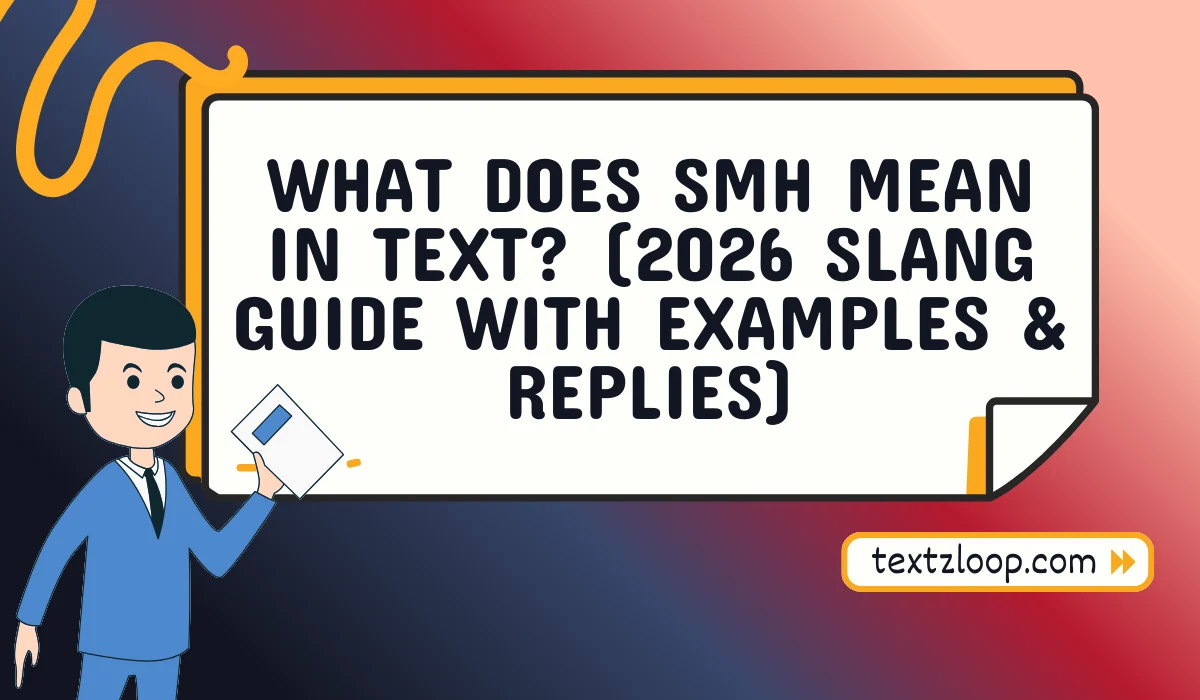
SMH means “shaking my head.” In text messages and online chat, it’s used to show disappointment, disbelief, frustration, or mild embarrassment about something someone said or did.
That’s the simple answer. But the way people use SMH in 2026 depends heavily on tone, platform, and context. Let’s break it down clearly.
SMH Meaning in Text (Full Explanation)
If you’ve seen someone type “smh” and wondered what it means, here’s the complete picture.
What Does SMH Mean in Chat?
The SMH meaning in text is:
- Shaking My Head
It’s an acronym, formed from the first letters of each word.
It’s not:
- A phonetic spelling
- A meme phrase originally
- A typing error
It’s simply an acronym that represents a physical reaction — shaking your head in disappointment or disbelief.
SMH Slang Meaning
As slang, SMH expresses:
- Disapproval
- Frustration
- Mild annoyance
- “I can’t believe this” energy
- Second-hand embarrassment
It often replaces a full sentence like:
- “That’s disappointing.”
- “I don’t agree.”
- “Why would you do that?”
- “Wow, really?”
SMH Meaning Across Social Media Platforms
The meaning stays consistent, but tone can shift depending on where it’s used.
SMH Meaning on Snapchat
On Snapchat, SMH is usually casual and reaction-based.
It’s often used:
- In private chats
- Over snaps reacting to something silly
- When responding to drama
Tone: Light frustration, playful annoyance, or mock disbelief.
Example:
“You really wore socks with sandals? smh”
SMH Meaning on TikTok
On TikTok, SMH appears:
- In comments
- In captions reacting to a video
- As part of meme culture
Tone: Can range from sarcastic to dramatic.
Example:
“He said pineapple belongs on pizza. smh”
Sometimes it’s exaggerated for humor rather than real annoyance.
SMH Meaning on Instagram
On Instagram, SMH is commonly used:
- In comment sections
- In DMs
- In story replies
Tone: Slightly more expressive than Snapchat, sometimes dramatic.
Example:
“You didn’t invite me?? smh”
SMH Meaning on WhatsApp
On WhatsApp, tone depends on closeness.
Among friends:
- Playful
- Mock dramatic
In group chats:
- Used when reacting to questionable decisions
Example:
“You forgot the tickets again? SMH.”
SMH Meaning in SMS (Regular Text Messages)
In SMS, SMH often feels more direct.
Since tone cues are limited in basic texting, it may:
- Sound harsher
- Feel more serious
So context matters more in plain texting than on visual platforms.
Tone & Context Variations of SMH
SMH can feel completely different depending on how it’s used.
Here are real mini conversations to show tone differences.
1. Funny Tone
A: I just tried to microwave ice cream.
B: smh
A: It was for science 😭
2. Sarcastic Tone
A: I’m going back to my toxic ex.
B: smh
A: Don’t judge me.
3. Playful Tone
A: I ate the last slice.
B: smh you’re fake
A: Survival of the fittest.
4. Angry Tone
A: I told everyone your secret.
B: smh that wasn’t yours to share.
A: I didn’t think it mattered.
5. Romantic / Flirty Tone
A: You forgot our anniversary.
B: smh I’m taking you out tonight to fix it
A: You better 😌
6. Disappointed Tone
A: I failed the test again.
B: smh you didn’t study, did you?
A: Not really.
7. Second-Hand Embarrassment
A: I waved back at someone who wasn’t waving at me.
B: smh that hurts
A: I’m moving cities.
8. Mild Judgment
A: I texted him first again.
B: smh
A: I know, I know.
9. Group Chat Drama
A: He posted her 10 minutes after we broke up.
B: smh
C: That’s wild.
10. Fake Outrage
A: I’m team pineapple pizza.
B: smh we can’t be friends
A: It’s elite.
Notice how SMH can be light, serious, funny, or dramatic — depending entirely on tone.
Grammar & Language Role of SMH
Understanding how SMH works grammatically helps avoid awkward use.
Part of Speech
SMH is an interjection.
It expresses emotion rather than adding grammatical structure.
Sentence Role
It can:
- Stand alone:
“smh” - Start a sentence:
“smh you really did that.” - End a sentence:
“You forgot again smh.” - Replace a full sentence entirely.
Does It Replace a Full Sentence?
Yes.
Instead of saying:
“I’m disappointed in you.”
Someone might just say:
“smh”
Formal vs Informal Usage
SMH is strictly informal.
Do not use it:
- In professional emails
- In academic writing
- In formal business chats
It belongs in:
- Casual texting
- Social media
- Friendly group chats
Tone Impact
Because it expresses disapproval, it can:
- Feel playful with friends
- Feel passive-aggressive in serious conversations
- Sound rude if used without context
Tone awareness is critical.
How to Reply When Someone Says “SMH”
If someone sends you “smh,” your reply depends on the situation.
Funny Replies
- “I deserve that.”
- “Let me live 😭”
- “It builds character.”
- “Not my finest moment.”
Serious Replies
- “Okay, that’s fair.”
- “I understand.”
- “I’ll fix it.”
- “That’s on me.”
Flirty Replies
- “You love me anyway.”
- “Don’t shake your head at me 😌”
- “Take me out and we’ll call it even.”
Neutral Replies
- “What?”
- “Why smh?”
- “Explain.”
- “What did I do now?”
The best reply always matches the energy behind the SMH.
Is SMH Rude, Disrespectful, or Bad?
Is SMH Rude?
Not inherently.
But it can feel rude if:
- Used during serious conversations
- Sent without explanation
- Said to someone you’re not close with
Is It Disrespectful?
It depends on tone.
Playful:
Harmless
Confrontational:
Can feel dismissive
Is It a Bad Word?
No.
SMH contains no profanity. It’s AdSense-safe and widely accepted slang.
Can You Use It in School?
Among friends — yes.
In assignments or emails to teachers — no.
Can You Use It at Work?
Only in casual chats with coworkers you’re close with.
Avoid it in:
- Client communication
- Professional emails
- Formal Slack threads
Who Uses SMH?
Age Groups
- Most common among Gen Z
- Frequently used by Millennials
- Rare among older generations
Regions
- Very popular in the United States
- Common in the UK
- Used globally in English-speaking online communities
Most Common Platforms
- TikTok
- Snapchat
- X (Twitter)
- Group chats
Origin & Internet Culture of SMH
SMH dates back to early internet chatrooms and texting culture in the 2000s.
It became widely popular when:
- Character limits encouraged short acronyms
- Twitter amplified short reactions
- Meme culture made reaction-based slang viral
Unlike newer slang terms, SMH wasn’t born from TikTok — it predates it.
It survived because:
- It’s quick to type
- It replaces full emotional reactions
- It mirrors a real-life gesture
Even in 2026, fast typing culture keeps it relevant.
SMH vs Other Internet Slang (Comparison Table)
| Term | Meaning | Formal/Informal | Tone | Popularity | Confusion Risk |
|---|---|---|---|---|---|
| SMH | Shaking my head | Informal | Disappointed / annoyed | Very High | Low |
| IDK | I don’t know | Informal | Neutral | Very High | Very Low |
| ION | I don’t | Informal slang | Casual / dialect-based | Medium | Medium |
| Dunno | Don’t know | Semi-informal | Casual | High | Very Low |
| IDC | I don’t care | Informal | Dismissive | High | Low |
SMH expresses emotion.
IDK and Dunno express uncertainty.
IDC expresses indifference.
They are not interchangeable.
Real-World Usage Insight
In real chats, people rarely use SMH alone in serious arguments.
Instead, it’s most commonly used:
- Playfully in friend groups
- Dramatically in meme comments
- Lightly when calling out small mistakes
It’s often paired with emojis now:
- “smh 😭”
- “smh lol”
- “SMH 🤦”
That softens the tone and prevents it from sounding harsh.
Frequently Asked Questions About SMH
What Does SMH Mean in Text Messages and Online Chat?
It means “shaking my head.” It expresses disappointment, disbelief, or mild frustration in a quick, informal way.
What Does SMH Mean on Snapchat and TikTok?
On Snapchat, it’s usually playful or reactive.
On TikTok, it’s often dramatic or sarcastic in comment sections.
Is SMH Rude, Disrespectful, or Harmless Slang?
It’s generally harmless.
However, tone matters. Without context, it can feel dismissive.
How Should You Reply When Someone Says “SMH”?
Match their tone.
If it’s playful, joke back.
If it’s serious, acknowledge the issue.
If you’re unsure, ask for clarification.
Is SMH the Same as IDK or Different?
Different.
SMH shows disappointment.
IDK shows uncertainty.
They serve completely different purposes.
Can You Use SMH in School or Work?
Use it only in casual conversations with peers.
Avoid it in:
- Formal writing
- Emails
- Professional documents
Final Summary: When to Use SMH (And When to Avoid It)
SMH means “shaking my head” and is used to show disappointment, disbelief, or playful frustration in informal conversations.
Use It When:
- Chatting with friends
- Reacting to something silly
- Lightly teasing
- Commenting on social media
Avoid It When:
- Talking to authority figures
- Sending professional emails
- Handling serious emotional discussions
Common Mistakes
- Using it during serious arguments
- Sending it alone without context
- Using it with people who may not understand slang
When used correctly, SMH is harmless, expressive, and efficient — which is why it’s still popular in 2026.
Discover more article
What Does SOS Mean in Text? (2026 Slang Guide with Examples & Replies)
What Does Gyatt Meaning in Text? (2026 Slang Guide with Examples & Replies)